
 EN
EN
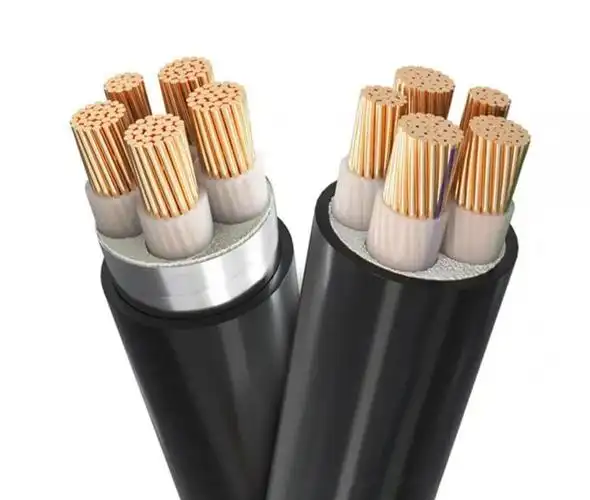
Understanding Current-Carrying Capacity and Its Core Determinants
Definition and Importance of Current-Carrying Capacity (Ampacity) in Industrial Power Cables
The term ampacity basically means how much electricity a power cable can handle before it gets too hot. When working with industrial equipment, picking the right ampacity rating for cables matters a lot because otherwise things can get dangerously warm, cause voltage drops, and eventually wear down the insulation over time. These issues all play into whether systems will keep running reliably for years or break down unexpectedly. Studies show that about one quarter of all electrical problems in manufacturing plants come from not matching the correct ampacity ratings to what's actually needed (Ponemon Institute research from last year backs this up). Getting this right isn't just about following specs on paper it really affects day to day operations.
Relationship Between Cable Size, Material, and Ampacity
The ampacity of conductors really comes down to their size and what they're made of. Copper just conducts electricity better than aluminum does. Take a look at the numbers: when comparing wires with the same cross section, copper can handle about 28 percent more current than aluminum. Let's put this into perspective. A standard 500 kcmil aluminum wire will support around 280 amps at 75 degrees Celsius according to NEC standards. Meanwhile, if we switch to copper for the same size wire, it can actually manage closer to 380 amps as shown in table 310.16 from the National Electrical Code. Because of this difference in performance, engineers have to think carefully about which material makes sense for different applications depending on how much load needs carrying and where exactly the wiring will be installed.
Role of Cross-Sectional Area in Determining Current-Carrying Capacity
Increasing a cable's cross-sectional area reduces electrical resistance, thereby enhancing current-carrying capacity. Doubling the cross-section typically increases ampacity by about 50%. As a practical example, a 10 AWG (5.26 mm²) industrial cable carries around 40A, whereas a 4/0 AWG (107 mm²) cable supports up to 260A under similar conditions.
Impact of Temperature Ratings (e.g., MV-90, MV-105) on Ampacity
Insulation temperature ratings directly affect allowable ampacity. Higher-rated insulation enables greater heat tolerance and thus higher current capacity.
| Rating | Max Operating Temp | Ampacity Adjustment Factor |
|---|---|---|
| MV-90 | 90°C | 1.0 (Baseline) |
| MV-105 | 105°C | 1.15 |
MV-105 rated cables can carry 15% more current than MV-90 equivalents under identical conditions. However, when ambient temperatures exceed 40°C, ampacity must be derated by 0.8% per °C rise (IEEE Std 835-2022), underscoring the need for precise thermal modeling in high-temperature industrial environments.
Key Factors Affecting Power Cable Sizing in Industrial Environments
Load Requirement Calculations for Cable Sizing and Their Role in Selecting Power Cables
Getting accurate load calculations right is really important when sizing cables properly. Engineers need to look at both the continuous current flowing through systems and those sudden spikes in demand that happen occasionally. Recent research from 2023 shows quite a shocking figure actually - around 27% of all industrial cable failures come down to conductors that just aren't big enough for what they're supposed to handle. When following best practice approaches, professionals combine the requirements outlined in NEC Article 310 with actual data collected during operations. This helps them figure out things like full load amperage levels, how harmonics might distort signals, and what kind of growth in electrical demand we can expect over the next quarter century. All these factors together tell us what minimum size wire we need to prevent dangerous overheating situations while keeping voltage drops under control at around 1.5% even on long cable runs throughout facilities.
Ambient Temperature Effects on Cable Performance and Derating Needs
Cables in industrial settings regularly face temperatures exceeding 50 degrees Celsius (about 122 Fahrenheit). When this happens, we need to reduce their current carrying capacity quite a bit according to NEC standards sometimes as much as 30%. For these hot conditions, engineers turn to MV-105 cables which can handle conductors at 105 degrees Celsius. These offer around 15% better performance than regular MV-90 cables. The difference matters a lot in places where heat is constant, especially in chemical processing facilities or refineries where equipment just runs hotter day after day.
Electrical Conductor Materials: Copper vs. Aluminum in Industrial Settings
Material choice impacts performance, cost, and weight:
| Property | Copper | Aluminum |
|---|---|---|
| Conductivity (S/m) | 58×10⁶ | 37×10⁶ |
| Weight (kg/km) | 3,200 | 1,200 |
| Lifetime Cost (20y) | $85k | $97k |
While copper provides 56% higher conductivity, aluminum's lighter weight makes it ideal for overhead installations despite requiring a 60% larger cross-section for equivalent current capacity. Advances in oxidation-resistant alloys have also improved aluminum's long-term reliability in non-corrosive environments.
Voltage Drop Considerations Based on Cable Length and Current Carrying Capacity
Voltage drop increases with cable length and current, governed by the formula:
Voltage Drop (%) = (√3 × I × L × R) / (V × 1000)
where I = current (A), L = length (m), R = resistance (Ω/km), and V = system voltage (V).
For a 400A load over 150 meters, upgrading from 90°C to 105°C insulation in 500 kcmil copper cables reduces voltage drop from 2.8% to 1.1%, demonstrating how temperature rating improvements enhance efficiency in long-distance power transmission.
Mechanical and Electrical Performance Requirements in Harsh Industrial Environments
Industrial cables need to satisfy several performance requirements at once. They have to pass tests for electrical performance according to IEEE 835 standards, demonstrate fire resistance as per UL 1277 guidelines, and show mechanical durability meeting the specs outlined in ICEA S-95-658. When dealing with tough conditions like constant vibrations, abrasive materials, and harsh chemicals, today's cable systems incorporate XLP insulation along with stainless steel braiding. These features actually help prolong the life of cables significantly. Some studies indicate that cables with these enhancements last around 40% longer in factories where machines are constantly vibrating (as noted in Pike Research findings from 2024).
Installation Methods and Their Impact on Power Cable Ampacity
Comparison of Installation Methods: In Air, Direct Burial, Raceways, and Cable Trays
How cables are installed makes a big difference in their actual current carrying capacity because of how heat gets handled during operation. When cables hang overhead in open air, they naturally cool down better through convection currents, which means these installations typically handle about 10 to maybe even 15 percent more current compared to those that are buried underground. Buried cables face problems with heat escaping since soil acts as an insulator, cutting back on cooling efficiency by roughly 30% in many cases. Raceway systems definitely protect wires from physical damage, but they also block airflow, particularly noticeable when several conductors are packed together inside the same conduit. Electricians usually need to adjust ratings downward somewhere around 10% to 20% for such installations. Cable trays strike a middle ground with decent ventilation, so the reduction in performance isn't as dramatic, generally falling within the 5% to 15% range depending on specific conditions at the site.
| Installation Method | Thermal Resistance | Typical Ampacity Adjustment |
|---|---|---|
| In Air | Low | Base rating |
| Direct Burial | High | -15% to -30% |
| Raceways | Moderate | -10% to -20% |
| Cable Trays | Low-Moderate | -5% to -15% |
Thermal Dissipation Differences Across Installation Environments
How well something handles heat depends a lot on how it's installed. The ground itself makes a big difference too when it comes to electrical capacity. According to those IEEE 835 guidelines we all know about, sandy soil actually lets heat escape around 18 percent better compared to clay-heavy ground. But watch out for concrete wrapped around ducts because that raises thermal resistance by about 40%. On the flip side, wires running overhead get some help from the wind which cools them down significantly. We're talking conductor temps staying between 15 to 20 degrees Celsius cooler than underground cables carrying exactly the same amount of current.
Adjusting Current-Carrying Capacity Based on Installation-Specific Conditions
When working environments differ from what's considered normal, engineers need to adjust their calculations using the correction factors found in NEC Table 310.15(B)(2)(a). Take this example: if we have a copper cable sized at 500 kcmil that normally handles 380 amps in open air, things change when temps hit around 40 degrees Celsius. Apply that 0.88 derating factor and suddenly our cable can only safely carry about 334 amps instead. And it gets trickier underground where heat transfer works differently. Soil properties matter a lot here. If the ground has higher thermal resistance, say 90 degree centigrade centimeters per watt compared to the standard 60, then bigger wires might actually be necessary just to keep everything running within safe temperature limits. This stuff really matters for proper electrical design.
Case Study: Ampacity Variation in Underground vs. Overhead Industrial Cable Runs
A 2023 analysis of 35kV cables in a petrochemical facility revealed notable differences:
- Overhead lines: Sustained 630A with 75°C conductor temperature
- Buried lines: Limited to 515A despite identical cable specifications
This 18% reduction stemmed from soil drying and interference from adjacent steam pipes, highlighting the importance of site-specific thermal modeling in complex industrial projects.
Leveraging Standards and Tables for Accurate Power Cable Selection
How to Interpret Cable Sizing Charts for Industrial Power Cables
Cable sizing charts translate load requirements into suitable conductor sizes by correlating ampacity with cross-sectional area, insulation type, and voltage class. For industrial use, prioritize charts that specify thermal endurance (e.g., 90°C or 105°C) and short-circuit ratings. The following simplified chart illustrates typical selections:
| Load Current (A) | Copper Conductor Size (mm²) | Maximum Voltage Drop (V/100m) |
|---|---|---|
| 100 | 25 | 4.8 |
| 250 | 70 | 3.2 |
| 400 | 150 | 2.1 |
These values help balance electrical performance with energy efficiency across various industrial loads.
Applying NEC (NFPA 70) Tables for Conductor Ampacity Determination
Article 310 of the National Electrical Code contains those standard ampacity tables we all rely on when working with copper and aluminum conductors. When dealing with a 400A industrial load situation, most electricians will check Table 310.16 which suggests at least a 600 kcmil copper conductor if the termination rating is around 75 degrees Celsius. But wait! Real world applications aren't always textbook perfect. Underground conduit installations generally need conductors that are 10 to 15 percent bigger than what's needed for overhead lines because buried cables can't dissipate heat as effectively. This makes sense when thinking about how much harder underground systems work compared to their aerial counterparts.
Adjusting Tabulated Values for Ambient Temperature and Grouping
The standard ampacity ratings we see in tables are based on perfect lab conditions, but things get complicated when applied in actual installations where temperatures fluctuate and other factors come into play. Looking at NEC Table 310.15(B)(1), there are these temperature correction factors listed. For instance, if ambient temps reach around 45 degrees Celsius, engineers need to apply a 0.82 multiplier factor to account for the heat. Then there's another table, Table 310.15(C)(1), that deals with what happens when multiple cables are bundled together. When four to six conductors share the same raceway space, the maximum current capacity drops by about 20%. Getting these adjustments right matters a lot because failing to do so can lead to overheating problems down the line. Thermal overload remains one of the main reasons why insulation breaks down in industrial electrical systems over time.
Example Calculation Using Standard Current Rating Tables for a 400A Industrial Load
- Base Requirement: 400A × 125% NEC safety factor = 500A minimum adjusted ampacity
- Conductor Selection: Per NEC Table 310.16, 500 kcmil copper (380A) is insufficient; 600 kcmil (420A) meets base needs
-
Environmental Adjustment: 420A × 0.82 (for 45°C ambient) = 344.4A
Despite derating, the selected conductor exceeds the required 500A × 0.82 = 410A threshold after applying the temperature correction, confirming suitability.
Overview of NEC Article 310: Conductor Ampacity Rules for Industrial Installations
NEC Article 310 establishes three key principles for industrial applications:
- Ampacity must reflect the highest expected temperature along the entire cable path.
- Bundled conductors require progressive derating based on quantity and spacing.
- Materials must comply with UL flame-retardant standards for use in industrial zones.
These rules ensure alignment with NFPA 70E arc-flash safety requirements and promote reliable, code-compliant designs.
Best Practices for Reliable and Future-Ready Industrial Power Cable Systems
Integrating Load Calculation for Cable Sizing into Early Design Phases
Proactive integration of load calculations during initial design prevents costly retrofits and ensures system longevity. Using worst-case scenario analysis (115% of projected peak demand) and combining IEEE 3001.5 guidelines with actual equipment load profiles reduces voltage drop risks by 42% compared to rule-of-thumb methods (NECA 2024).
Selecting Appropriate Cable Gauge and Material Based on Lifecycle Cost Analysis
Copper has about 25 percent less electrical resistance compared to aluminum, but this advantage comes at a price since copper typically costs around 18% more initially. Looking at real world applications, a study covering 15 years of operation for 500kVA systems found something interesting. Modern aluminum alloys that resist oxidation actually end up costing 12% less overall when considering all expenses in environments where corrosion isn't a major concern. This finding comes from the EPRI Copper-Aluminum Tradeoff Study released in 2023. These results are changing perceptions, especially in industries needing large scale installations where long term savings matter more than initial material costs.
Future-Proofing Industrial Systems Against Load Growth and Environmental Changes
Modern industrial power systems should include 20% headroom for future load expansion and accommodate ±15°C fluctuations in ambient temperature. Facilities adopting Industry 5.0-ready cabling—featuring UV-resistant jackets and halogen-free materials—report 30% fewer upgrades, aligning infrastructure with evolving sustainability and regulatory demands.
Strategy: Combining NEC Compliance with Real-World Operational Data for Reliability
Integrating NEC 310.15(B)(1) tabulated values with IoT-enabled thermal monitoring allows dynamic ampacity management. In steel mills, this hybrid approach has reduced premature insulation failure by 63%, enabling safer, more efficient utilization of existing conductors through real-time condition assessment.
FAQ
What is ampacity in industrial power cables?
Ampacity refers to the maximum amount of electric current a power cable can conduct before overheating. It is crucial for selecting cables that ensure the safety and longevity of industrial systems.
Why is copper preferred over aluminum for certain applications?
Copper has superior conductivity compared to aluminum, handling about 28% more current than aluminum cables of the same size. This makes copper more suitable for applications demanding higher electrical performance.
How do temperature ratings of cable insulation impact ampacity?
Higher insulation temperature ratings allow cables to carry more current by tolerating more heat, thus affecting ampacity positively. For example, MV-105 rated cables can carry up to 15% more current than MV-90 rated cables.
What factors necessitate the derating of cable ampacity?
Factors such as high ambient temperatures, buried installations, and grouped cables can necessitate the derating of cable ampacity to prevent overheating.
How does installation method affect cable ampacity?
Installation methods such as running in air or burying can impact a cable's ability to dissipate heat, affecting its ampacity. Cables in open air tend to dissipate heat better, thus carrying more current compared to buried cables.
Table of Contents
- Understanding Current-Carrying Capacity and Its Core Determinants
-
Key Factors Affecting Power Cable Sizing in Industrial Environments
- Load Requirement Calculations for Cable Sizing and Their Role in Selecting Power Cables
- Ambient Temperature Effects on Cable Performance and Derating Needs
- Electrical Conductor Materials: Copper vs. Aluminum in Industrial Settings
- Voltage Drop Considerations Based on Cable Length and Current Carrying Capacity
- Mechanical and Electrical Performance Requirements in Harsh Industrial Environments
-
Installation Methods and Their Impact on Power Cable Ampacity
- Comparison of Installation Methods: In Air, Direct Burial, Raceways, and Cable Trays
- Thermal Dissipation Differences Across Installation Environments
- Adjusting Current-Carrying Capacity Based on Installation-Specific Conditions
- Case Study: Ampacity Variation in Underground vs. Overhead Industrial Cable Runs
-
Leveraging Standards and Tables for Accurate Power Cable Selection
- How to Interpret Cable Sizing Charts for Industrial Power Cables
- Applying NEC (NFPA 70) Tables for Conductor Ampacity Determination
- Adjusting Tabulated Values for Ambient Temperature and Grouping
- Example Calculation Using Standard Current Rating Tables for a 400A Industrial Load
- Overview of NEC Article 310: Conductor Ampacity Rules for Industrial Installations
-
Best Practices for Reliable and Future-Ready Industrial Power Cable Systems
- Integrating Load Calculation for Cable Sizing into Early Design Phases
- Selecting Appropriate Cable Gauge and Material Based on Lifecycle Cost Analysis
- Future-Proofing Industrial Systems Against Load Growth and Environmental Changes
- Strategy: Combining NEC Compliance with Real-World Operational Data for Reliability
- FAQ