
 EN
EN
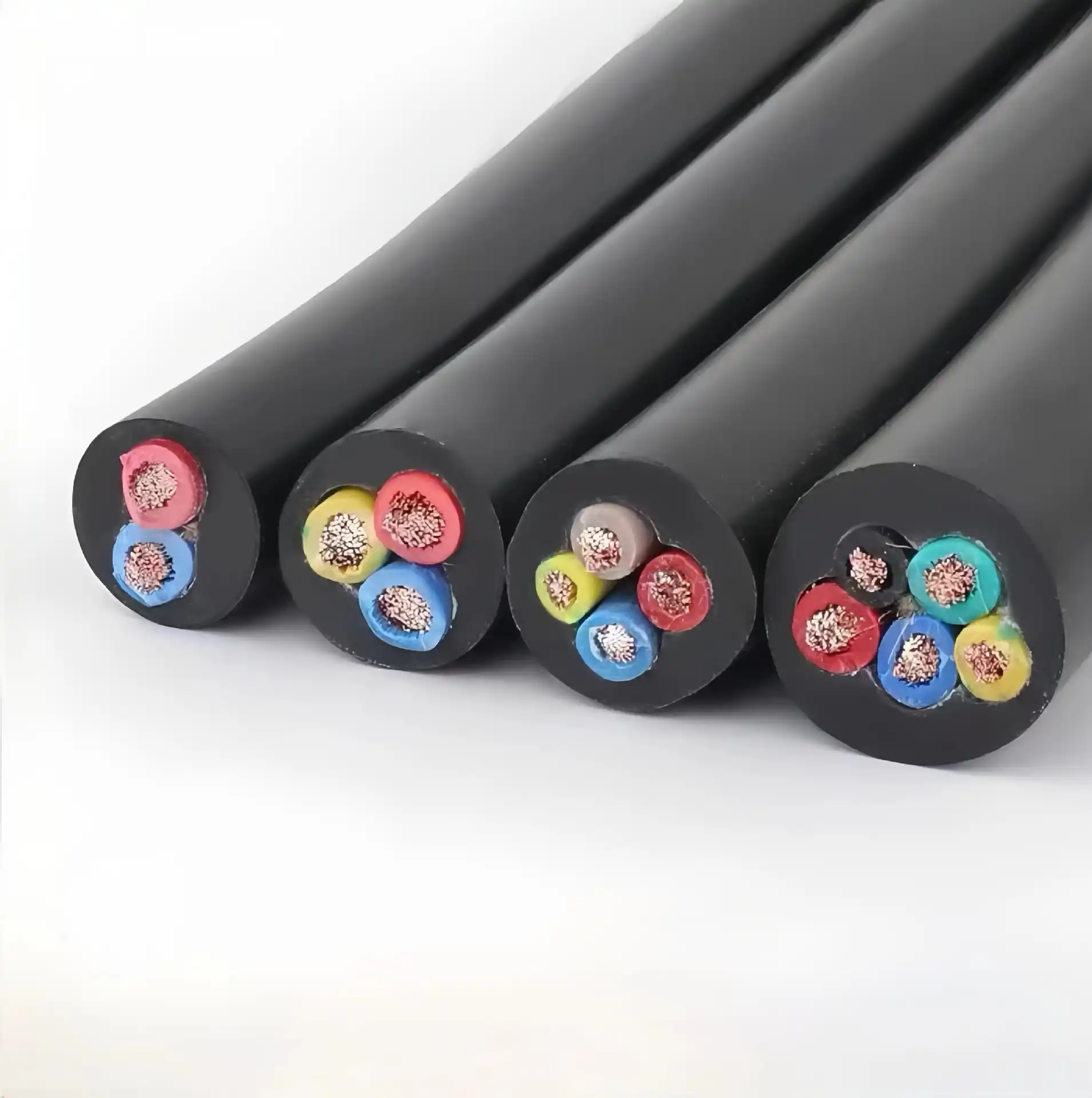
Why Humidity Accelerates Aging of Plastic Insulated Power Cables
Hydrolytic Degradation of PVC and XLPE Insulation Under Sustained Moisture Exposure
Power cables insulated with plastics such as Polyvinyl Chloride (PVC) or Cross-linked Polyethylene (XLPE) tend to degrade over time when they're constantly exposed to high levels of moisture. Water actually works its way into the plastic material, breaking down those important chemical bonds found in things like ester groups within plasticizers and other weak spots along the polymer chains themselves. When it comes specifically to PVC cables, the moisture pulls out these plasticizers which makes them less flexible and leads to problems like becoming brittle and developing tiny cracks. XLPE cables face similar issues too, where water gets into the non-crystalline parts of the material and starts weakening those cross links between molecules. This basically cuts down on how well they insulate electricity, sometimes dropping their effectiveness by around 30% in really damp areas. And interestingly enough, this whole breakdown happens faster when temperatures go up - generally speaking, the rate at which this happens doubles whenever there's a 10 degree Celsius increase. Throw in some contaminants from the air like salt particles or acidic substances mixed into the moisture, and these reactions get even worse, creating paths through which electricity might leak. If cables stay in environments where humidity stays above 70% for long periods, their lifespan gets cut nearly in half compared to what we'd see in completely dry conditions. This obviously increases the chances of failures happening throughout our entire power grid system.
How Humidity Synergizes with Heat and Oxygen to Accelerate Polymer Chain Scission
Humidity isn't working solo here. It actually makes things age much faster when combined with heat and oxygen in what amounts to a pretty damaging partnership. When water vapor gets into insulation materials, it helps oxygen move through them more easily. This leads to something called oxidative chain scission where those pesky free radicals start breaking apart polymer chains. The result? Carbonyl groups form which basically wreck havoc on the molecular structure. And let's not forget temperature plays its part too. Higher temps speed up both hydrolysis and oxidation processes at an exponential rate. Moisture acts kind of like a delivery system for heat and other reactive stuff, pushing them further into materials over time. Constant expansion and contraction caused by changing humidity levels creates mechanical stress within materials. These stresses create tiny cracks that open up new surfaces vulnerable to further breakdown. All these factors together cut down tensile strength by around 40 percent compared to just one cause alone. What we see in practice is materials becoming brittle way sooner than expected, insulation shrinking, higher dielectric losses, and ultimately electrical failures happening in environments where humidity remains high.
Key Signs of Humidity-Induced Degradation in Plastic Insulated Power Cables
Visual and Mechanical Indicators: Cracking, Discoloration, and Loss of Tensile Strength
When power cables with plastic insulation are exposed to high humidity for extended periods, they show visible signs of damage. Micro cracks start forming on surfaces because moisture interferes with how polymer chains move around, which makes materials brittle faster than normal. The color changes too - usually turning yellowish or developing a chalky white appearance. This happens when UV light breaks down materials quicker, especially when water is present. Lab tests back this up showing insulation that gets soaked loses roughly 40% of its original strength. The bonds between molecules break apart through a process called hydrolysis in both PVC and XLPE materials. As these cables weaken, they become much less able to handle regular stresses from installation work, vibrations during operation, and other environmental factors. Eventually, the inner conductors get exposed and at risk of failure.
Electrical Symptoms: Increased Dielectric Loss, Reduced Insulation Resistance, and Partial Discharge Onset
Electrical performance deterioration provides definitive evidence of moisture ingress:
- Dielectric loss increases by 15–30%, detectable via tan-delta testing
- Insulation resistance drops below 1 MΩ/km—well below the healthy benchmark of 1000+ MΩ/km—enabling leakage currents and thermal runaway risks
- Partial discharge (PD) initiates at relative humidity thresholds as low as 30%, often accompanied by audible crackling or RF emissions
These symptoms arise from moisture-induced ionization pathways that lower the breakdown threshold. As documented in peer-reviewed dielectric studies, this trifecta frequently precedes catastrophic insulation failure in humid climates.
Proven Prevention Strategies for Plastic Insulated Power Cables in Humid Climates
Moisture-Resistant Cable Design: Enhanced Sheathing, Hydrophobic Fillers, and Barrier Tapes
Material engineering plays a crucial role as the frontline protection against environmental degradation. The triple extrusion process used for XLPE sheathing produces a much denser barrier that cuts down water vapor transmission around 80% compared to regular PVC materials. When it comes to keeping water out, hydrophobic minerals like fumed silica work wonders at stopping moisture from getting absorbed into the insulation itself. For really demanding situations where performance matters most, engineers turn to laminated aluminum polymer tapes that literally stop moisture from moving both along and across the cable structure. All these combined features ensure that dielectric strength stays well above 15 kV/mm even after spending 5,000 hours in conditions with 95% humidity. These results have been confirmed through standard testing procedures outlined in IEC 60811-504 and IEEE 532 guidelines, giving manufacturers confidence in their product reliability.
Installation Best Practices: Sealing, Drainage, and Avoiding Condensation Traps
Field implementation is equally vital. Vulnerable points–especially terminations, splices, and conduit entries–must be sealed against moisture ingress:
- Apply self-amalgamating rubber tape at termination points to form permanent, waterproof bonds
- Route cables with a 1–2° downward slope in trays or ducts to prevent water pooling
- Install conduits away from zones with rapid temperature fluctuations (>5°C/hour) to minimize condensation
Conduit entry points require IP68-rated compression glands, and junction boxes should include silica gel desiccant packs. Industrial maintenance data shows these practices reduce humidity-related failures by 60%.
Protective Coatings and Field-Applied Moisture Barriers for Retrofit Applications
Existing systems can benefit greatly from solutions implemented after installation, which often means longer operational life. Injecting thixotropic silicone gel into those jacket voids creates something pretty amazing actually self healing barriers that stop those tiny cracks from spreading and hold up against water pressure. The two part polyurethane stuff works really well too, forming smooth coatings that won't wear down easily even in tough tropical conditions where things get pretty rough on equipment. And let's not forget about UV cured acrylates either they set super fast, sometimes in less than a minute and a half, and make surfaces much more water repellent with contact angles over 110 degrees. As long as everyone follows what the manufacturers say in their instructions, these kinds of retrofits typically add between eight to twelve extra years of service before anyone needs to replace entire cables.
Selecting and Specifying Humidity-Resistant Plastic Insulated Power Cables
When specifying plastic insulated power cables for humid environments, prioritize cross-linked polyethylene (XLPE) over standard PVC due to its superior resistance to hydrolytic degradation and long-term stability under wet-heat stress. Key selection criteria include:
- Material composition: XLPE retains 85% of initial tensile strength after 1,000 hours at 90°C/85% RH (per IEEE 532 accelerated aging protocol)
- Barrier integration: Cables with longitudinal aluminum-polymer moisture-blocking tapes reduce water ingress by 97% versus non-barrier designs
- Jacketing: Medium- or high-density polyethylene (MDPE/HDPE) sheathing outperforms PVC in sustained humidity–demonstrating 40% less dielectric loss after five years of tropical field exposure
Verification must include:
- Third-party certification to UL 1277 (for power cables) or IEC 60502-2 (for rated voltages up to 30 kV), with explicit wet-location performance validation
- Accelerated aging tests simulating 20 years of service in tropical climates (e.g., 85°C/85% RH cycling per IEC 60068-2-30)
- Partial discharge measurements 5 pC at rated voltage, confirming integrity of insulation and interfaces
Avoid cables incorporating hygroscopic fillers (e.g., untreated clay or cellulose). Specify factory-applied silicone gel coatings at termination points in condensation-prone locations. For retrofits, solvent-based polyurethane coatings applied in-situ–following surface preparation per ASTM D3359–can effectively restore moisture resistance to degraded cables.
FAQ
What types of plastic insulation are most vulnerable to humidity?
Plastic insulated power cables that use Polyvinyl Chloride (PVC) and Cross-linked Polyethylene (XLPE) are most vulnerable to humidity because they are prone to hydrolytic degradation under sustained moisture exposure.
How does high humidity affect the lifespan of plastic insulated power cables?
High humidity can significantly reduce the lifespan of plastic insulated power cables, sometimes cutting it nearly in half compared to dry conditions. Moisture-induced degradation, combined with temperature and oxygen, accelerates polymer chain scission, leading to mechanical and electrical failures.
What preventive measures can be taken to protect plastic insulated power cables from humidity?
Preventive measures include using moisture-resistant cable designs with enhanced sheathing, hydrophobic fillers, and barrier tapes. Installation best practices involve sealing exposed points and ensuring proper drainage to avoid water pooling. Protective coatings and moisture barriers can also be applied to existing systems.
Why should XLPE be prioritized over PVC in humid environments?
XLPE should be prioritized over PVC due to its superior resistance to hydrolytic degradation and better long-term stability under wet-heat stress, maintaining up to 85% of initial tensile strength after extended exposure.
Table of Contents
- Why Humidity Accelerates Aging of Plastic Insulated Power Cables
- Key Signs of Humidity-Induced Degradation in Plastic Insulated Power Cables
- Proven Prevention Strategies for Plastic Insulated Power Cables in Humid Climates
- Selecting and Specifying Humidity-Resistant Plastic Insulated Power Cables
-
FAQ
- What types of plastic insulation are most vulnerable to humidity?
- How does high humidity affect the lifespan of plastic insulated power cables?
- What preventive measures can be taken to protect plastic insulated power cables from humidity?
- Why should XLPE be prioritized over PVC in humid environments?